Clicky

Metropest Auckland
Metropest, Auckland, Rotorua pest control

0800 55 55 07

Eco, Family, Pet friendly Auckland & Rotorua pest control

0800 55 55 07

Eco, Family, Pet friendly Auckland & Rotorua pest control

  • Home
  • Non Chemical Services
  • Commercial/Industrial Services
  • Pest Information
    • Ants
    • Bed Bugs
    • Bees
    • Borer
    • Carpet Beetles
    • Cockroaches
    • Crickets
    • Fleas
    • Flies
    • Hornets & Wasps
    • Mice & Rats
    • Mosquitoes
    • Pantry Moths
    • Possums
    • Silverfish
    • Slaters
    • Spiders
    • Stoats & Ferrets
    • Termites
  • Pest Control Help
  • Contact

Pest, bug or rodent problems?

Get the guys with over 30 years experience!

Get pest help

Contact Us

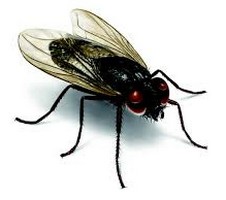
fliesFlies

Flies are known pests worldwide.  They are generally connected with dirt, decay and disease, as many species of fly are known to carry disease due to their ingestion of animal faeces, and connection with decaying bodies. The fly is found on every continent with the exception of the innermost polar regions of the Arctic Circle and Antarctica.There are more than 240,000 different species of fly worldwide.

Most fly species primarily breed outdoors in decaying material which is most likely teeming with bacteria capable of causing disease. The presence of Flies in cafes, or food manufacturing can be dangerous. 

How to get rid of flies in your home

On any supermarket shelf, you can find multiple fly sprays which are OK for a DIYer to administer spot treatment for the problem. As with most non-professional products, though, these are weak alternatives.

In many cases an interior treatment is sufficient, we use a product with a repellent effect for the interior treatment which will assist in keeping Flies at bay. in cases where you have issues outside with Flies then we can also carryout an exterior treatment.

Get pest help

Contact Us

fleasFleas

Fleas live and feed on a host such as animals or Humans but also live in carpets, sofas as well as outside in bark, sand or soil.

Fleas lay eggs on the pet when the host is resting. The white eggs fall off the pet onto the carpet, soil etc. Small blind larvae emerge from the eggs. These larvae move away from the light, burrowing down into the carpet, cracks in floorboards or into the soil. They feed on protein, such as flea droppings of partly digested blood. They moult three times before forming a pupa. The larva changes into the adult in the pupa. The pupa is sticky, so it binds its surrounds to itself, becoming invisible.
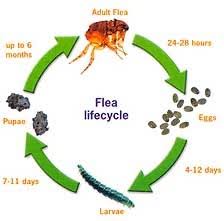
flea life cycleIn summer, a flea may be ready to hatch from the pupa about 7-14 days after it is formed, however they can remain dormant for up to 18 months. Hatching of the flea from the pupa is triggered by nearby movement, predominantly during warm, moist weather conditions.

After feeding on the host, the engorged female flea is ready to mate and lay eggs – about 24 hours after hatching. She is capable of laying up to 500 eggs (27 per day) over a lifetime which may span several weeks.

  1. Indoors – remove toys, clothes etc from the floor. Some insecticides will affect fish. Cover the fish tank and turn off the filter prior to treatment. Remove pets from the area to be treated – return them only after the treatment has dried.
  2. Treat the pet(s) – advice may be sought from your Veterinarian. The use of soaps or shampoos may reduce the residual action of the treatment.
  3. Be patient.
  4. Even if everything has been done correctly, you will still see newly hatched fleas, usually for several weeks. Do not leave flea infested areas undisturbed – movement hatches fleas.
  5. Do not vacuum for at least seven days after treatment. Place the vacuumings in a bag and put in the bin.

  6. Leave your pet in the flea infested areas – it will attract the fleas. If the pet is removed from the infested area, fleas will continue to hatch for about six weeks with normal ‘human’ activity. Retreat your pet regularly according to the label of the on-animal flea product.

EXPECTATION

Fleas will be seen when an area is newly disturbed – such as when people get up in the morning or go outside – but not later in the day in that area. If the treatments are working, fleas will hatch, contact the treated surface (carpet, soil - treated by our company; or pet - treated with on-animal product) and die within a few hours.

HELPFUL HINTS

Treat your pets as soon as you can. You will get better results if all flea treatments – environmental and on-animal – are done about the same time.

DO NOT AVOID FLEA INFESTED AREAS AFTER THE TREATMENT – YOU WILL REDUCE THE EFFECTIVENESS OF THE TREATMENT – especially remember the spare room, shed or places where the pet likes to rest.

If you remove the pet, flea problems may appear to be worse – as you have become the only potential host.

It is best to treat before the numbers build up, there is no need to go through the discomfort of flea bites.

Entering vacant houses will hatch any fleas waiting to hatch. This is especially a problem with vacant rental and holiday houses.

If you are going on holidays, have a friend stomp through the house/yard several times while you are away, especially on the day of your return – the fleas will hatch and die on the treated surfaces before you return. (You will owe your friend big time.)

A SUCCESSFUL TREATMENT MUST INCLUDE ALL AREAS FREQUENTED BY THE PET

PHONE NOW AND GET OUR GST FREE DEAL ON YOUR FIRST TREATMENT

Get pest help

Contact Us

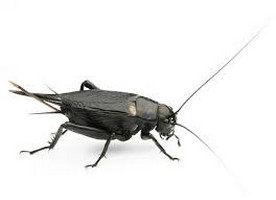
CricketCrickets

The field cricket is one of the most common household accidental invader insect pests. 

PHONE NOW AND GET OUR GST FREE DEAL

How to get rid of crickets in your home

To get rid of crickets for a sustained period, and deter re-infestations, a professional control treatment administered by a licensed professional is recommended.

In most cases we will need to treat both inside and an area around the outside of your home with long lasting pesticides.

Get pest help

Contact Us

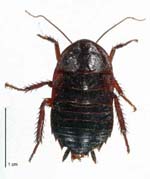
Cockroaches

American

America Cockroaches

Gisborne

Gisborne Cockroaches

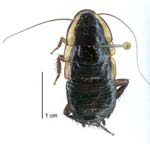
Native Black

Native black Cockroaches

German

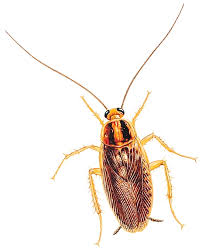
German Cockroaches

Their wide distribution and close association with humans, coupled with the high frequency with which they carry human diseases, in and on their bodies, have given them a very high pest status in most parts of the world

Generally speaking, cockroaches common to New Zealand are nocturnal and omnivore feeders, and can transmit diseases and bacteria pathogens such as salmonella. In addition, they can cause skin irritations, allergic reactions and breathing difficulties.

The cockroach has a life cycle consisting of three distinct stages: egg, nymph, and adult. The specific elements of the life cycle vary according to species, however. The female can lay 5-30 egg sacs containing 12-40 eggs, which can make them difficult to get rid of once they have entered a home or residential property.

Dealing with this pest

Effective eradication requires an understanding of the type of cockroach that's in your home, what they need to survive and how to exterminate or exclude them.

PHONE NOW AND GET OUR GST FREE DEAL ON YOUR FIRST TREATMENT

How to get rid of cockroaches in your home

To get rid of cockroaches for a sustained period, and ward off re-infestations, a professional cockroach control system handled by a licensed professional is needed.

>We use a combination of products not only to kill the roaches but also to break the life cycle, no one product will do the job, in some cases both interior and exteriors need to be treated.

Get pest help

Contact Us

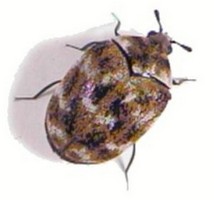
Carpet beetleCarpet Beetle/Hide beetle

Carpet beetle larvae feed on feathers, fur, silk, wool and other natural materials as well as your expensive carpet.

PHONE NOW AND GET OUR GST FREE DEAL OFF YOUR FIRST TREATMENT

How to get rid of carpet beetles

Commercial grade treatments are available to control and remove these pests. However, like all quality pest control products, the treatment for carpet beetles needs to be applied by a licensed professional, as these pests can destroy your carpet very quickly.

We will need to wet spray your carpet with specialized chemicals to eradicate the Beetles, Larvae and eggs.

Get pest help

Contact Us

  1. Borer
  2. Bees
  3. Bed Bugs
  4. Ants

Page 2 of 3

  • 1
  • 2
  • 3

Home | Contact | Privacy Policy | Sitemap

© 2012-2026 Metropest Pest Control Services  | All rights reserved